Research visit by Tim de Kruiff to BETA
18 May 2026
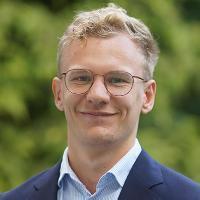
From May 18 to 22, 2026, BETA will host Tim de Kruiff, a postdoctoral researcher in the Department of Food and Resource Economics at the University of Copenhagen, for an academic visit to the APT campus.
His work lies at the intersection of environmental economics and the analysis of individual preferences. His research focuses on environmental valuation, choice modelling, and more broadly on understanding individuals’ preferences in response to ecosystem changes.
He is particularly interested in rewilding processes, analyzing trade-offs between different degrees of wildness as well as associated societal perceptions of nature. His recent research examines the impact of large herbivore reintroductions and stochastic disturbances in landscapes.
Drawing on approaches such as value pluralism and outcome uncertainty, he seeks to better understand the relationships between biodiversity, ecosystem services (particularly recreation), and individual preferences for rewilding and nature restoration.
During his stay at BETA, Tim de Kruiff will take part in several scientific activities, providing an opportunity to present his recent work and engage with members of the research unit. He will give a seminar on May 19 entitled: “Value pluralism and the economic valuation of landscape change: Evidence on the suitability of stated preference methods.”
He will also collaborate with Jens Abildtrup and Manegdo‑Ulrich Doamba on the Horizon Europe project wildE – climate-smart rewilding. This project aims to develop innovative approaches to ecological restoration that benefit both climate and biodiversity while addressing the needs of local communities. By promoting “climate-smart” rewilding, it seeks to support large-scale ecosystem restoration and contribute to achieving climate, land-use, economic, and societal objectives.
Finally, his visit will include discussions with BETA PhD students working on environmental valuation, fostering scientific exchange and the sharing of methods in this field.
This visit contributes to strengthening the laboratory’s international collaborations and to advancing research on the economic dimensions of environmental challenges.