DISIMS: a Franco-German project supported by the ANR to analyse industrial decarbonisation
08 October 2026
The DISIMS project (Decarbonizing Industrial Sectors: Innovation, Market Structure, and Public Policies), coordinated by Bertrand Koebel, Professor at the University of Strasbourg and member of BETA, has been selected under the Franco-German Humanities and Social Sciences Programme (FRAL 2025) of the French National Research Agency (ANR). The project benefits from ANR funding of €121,762. Starting in September 2026, it will run for a period of 36 months
Conducted jointly by BETA and the ZEW – Leibniz Centre for European Economic Research in Mannheim, the project brings together a French team consisting of Bertrand Koebel, Isabelle Maret (BETA), Rabah Amir (University of Iowa) and Nattirat Promwang-Mayer (BETA), as well as a German team coordinated by Oliver Schenker (ZEW) and including Sebastian Rausch (Heidelberg University & ZEW) and Henrik Neumeier (ZEW).
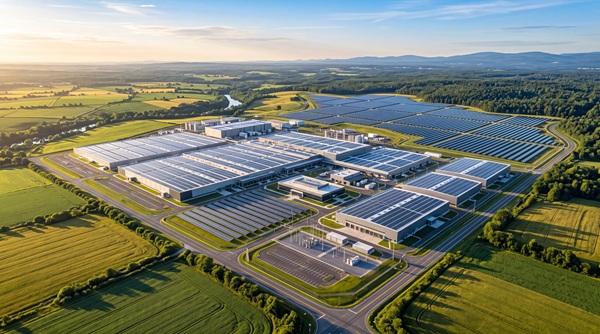
The project addresses one of the major challenges of the transition to climate neutrality: the decarbonisation of industrial sectors. To meet the climate targets set by France and Germany, industry will need to adopt new production processes with lower greenhouse-gas emissions. This transformation raises a number of economic questions. How are firms incentivised to innovate? What role do competition and market structure play in the adoption of low-carbon technologies? How can public policies be designed to accelerate the transition while preserving industrial competitiveness?
DISIMS aims to answer these questions by combining insights from environmental economics and industrial organization, two research fields that are still rarely brought together. The project will investigate how environmental regulation and market structures influence firms’ incentives to innovate, examine the economic consequences of industrial decarbonisation at both the sectoral and economy-wide levels, and identify the public policies best suited to support this transition. Drawing on the distinct characteristics of the French and German industrial and energy systems, the project seeks to generate new insights into the interplay between market power, innovation and climate policy effectiveness, ultimately helping to design cost-effective public policies for industrial decarbonisation in Europe