Issue 52 of the Bulletin of the Observatory of Economic Policies in Europe is now available
02 November 2026
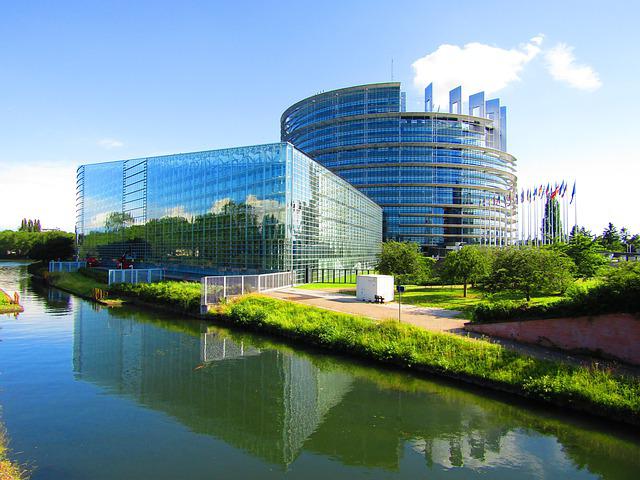
Find Issue 52 of the Bulletin of the Observatory on Economic Policies in Europe (OPEE) on the Observatory’s website.
Contents of this issue:
- Editorial – Does Europe regulate better than it innovates?, by Claude Diebolt (University of Strasbourg, BETA)
- China’s science, technology and innovation policies since 1978, by Mingfeng Tang (Southwest University of Finance and Economics – SWUFE, China).
- Capitalism, Sustainability and Democracy: Current Challenges for Innovation and Entrepreneurship in Europe, by Luc Soete (Professor Emeritus at Maastricht University, Netherlands; and member of the Royal Netherlands Academy of Arts and Sciences – KNAW; former Director of the UNU-MERIT Institute and former Rector of Maastricht University).
- China’s New National Effort System, by Meixing Dai (University of Strasbourg, BETA)
- From Resources to Talent: Governing Innovation in the 21st Century, by Claude Diebolt (University of Strasbourg, BETA)
- Edumetrics: A Different Way of Measuring Human Capital in the 21st Century, by Romain Diebolt (Southampton Business School – University of Southampton)
Are you a researcher whose work focuses on topics relating to economic policies in Europe and the European economy, and would you like to contribute to the next issue? A call for papers for the next issue of the Bulletin is now open.
The OPEE Bulletin, a peer-reviewed journal, invites researchers, academic staff and practitioners to submit original contributions in French on the major transformations of the European economy or topics related to it. Articles must follow a rigorous analytical approach and take into account contemporary changes in the European and global environment. In particular, contributions may address:
- The implications of artificial intelligence: the rapid advances in AI and intelligent robotisation have immense implications for all aspects of the economy and the design of economic policies. All contributions are welcome.
- Geo-economic and geopolitical challenges: economic sovereignty, the European Union’s strategic autonomy, security of supply, and the redefinition of relations between the EU and other major global powers.
- The challenges of the dual climate and technological transition: the Green Deal, decarbonisation policies, the energy transition; digitalisation, artificial intelligence and the regulation of digital markets, as well as their implications for society, economic science, and innovation and industrial policies.
- Economic and social issues related to European integration: responses from the cyclical and structural policies of the EU and its Member States in the face of multiple crises, market integration, social cohesion and convergence dynamics.
- Interdisciplinary approaches: in particular, contributions from law, political science, sociology and history, which can offer additional insight into the complexity of the European economy and its policies.